

 Written by: Justin Roberts
Posted on: July 3, 2026
Written by: Justin Roberts
Posted on: July 3, 2026
Oriole Habitat and Range: Where Each Species Lives
All three oriole species share one non-negotiable habitat requirement that separates them from a ground-hunting bird like a bluebird: tall trees. Unlike species that favor wide-open country, orioles need mature deciduous trees for both nesting and much of their foraging, and none of the three…
 Written by: Justin Roberts
Posted on: July 3, 2026
Written by: Justin Roberts
Posted on: July 3, 2026
Do Orioles Migrate? Yes — Here’s the Full Picture
Unlike bluebirds, which show a partial migration pattern with many populations staying resident year-round, orioles are true long-distance migrants — virtually the entire population of all three species leaves North America completely each winter, with no meaningful resident population left behind. A Genuine Neotropical Migration…
 Written by: Justin Roberts
Posted on: July 3, 2026
Written by: Justin Roberts
Posted on: July 3, 2026
Oriole Predators (and Cowbird Parasitism): What Threatens the Nest
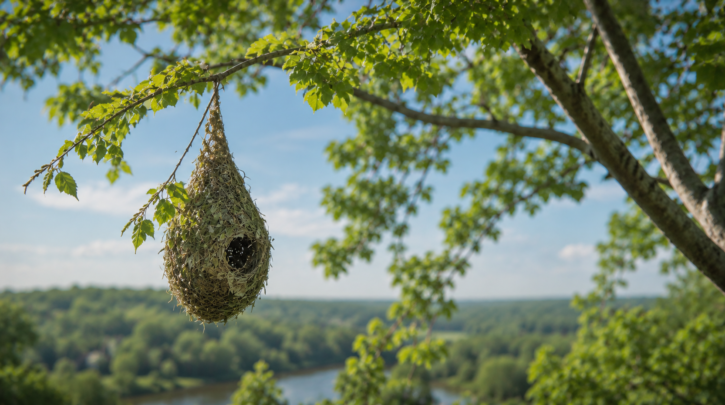
Because the oriole pouch nest hangs at the tip of a branch rather than sitting in a fixed location or an enclosed cavity, orioles face a somewhat different predator profile than a species like the bluebird — including one threat that’s essentially irrelevant to cavity…
Written by: Justin Roberts
Posted on: July 3, 2026
Oriole FAQ: Common Questions Answered
A roundup of the questions we hear most often from people just starting to feed or watch orioles, answered briefly and honestly. Are orioles rare? No. Orioles are common across appropriate habitat during the breeding season, though they can be genuinely easy to overlook once…