
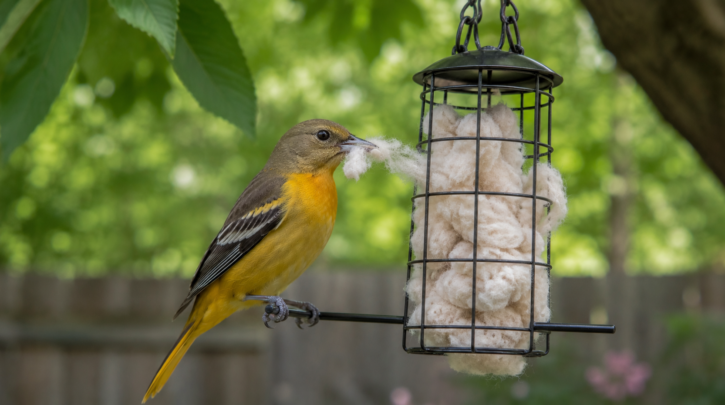

Offering nesting material is one of the more direct ways to support a nesting pair, but the safest options have shifted somewhat from older common advice — see our full nesting material guide for the safety principles behind these picks.
Why Cotton Tufts Are Increasingly Preferred Over String
Even carefully cut, natural-fiber string and yarn still carry some entanglement risk, and wool or cotton skeins are sometimes treated with dyes or chemical finishes that aren’t ideal inside a nest. Loose, fluffy cotton tufts avoid both problems: there’s no strand long enough to wrap around a leg or neck, and plain, undyed cotton carries no chemical treatment concern. This is why several dedicated nesting-material products on the market now favor tuft-style cotton over any string or yarn format.
Duncraft Bird Nester
A hanging wire basket pre-filled with cotton tufts and aspen fiber, designed to let birds pull loose material directly from the basket rather than dealing with any length of string at all. The vinyl-coated wire construction holds up outdoors for a full season, and the basket format keeps material from blowing away between visits the way a loose pile might.
See: Duncraft Bird Nester
Cottontail Nest Builder
A simpler hanging mesh net filled with 100% cotton fiber, sized as a lower-cost option for hosts who want to try offering material without committing to a larger basket-style dispenser. The cotton dries quickly even after rain and holds together well as birds pull tufts free.
Refill Options
Both basket and net-style dispensers are generally available with standalone refill bags of cotton fiber, letting you restock an existing dispenser through a full nesting season without replacing the whole unit each time it empties.
What to Avoid, Revisited
Whatever dispenser you choose, the same cautions from our nesting material guide still apply: no dryer lint, no fishing line or synthetic monofilament, and nothing longer than a few inches if you do choose to offer any string-format material alongside cotton tufts.
Placement
Hang a dispenser somewhere visible, ideally within sight of an existing feeding station, during the spring nest-building window covered in our nest guide. Material offered outside that window is less likely to be gathered, since orioles only actively collect nest fiber during the relatively short construction period.
Curious what happens to the material once it’s gathered? See our nest guide for how the woven pouch comes together.
How Long a Dispenser Lasts
A single basket or net-style dispenser, filled once at the start of the spring nesting window, typically provides enough material for several nesting attempts across a neighborhood, since orioles and other cavity- and open-nesting birds alike will make repeated visits to gather small amounts over the one-to-two-week construction period. Refilling once the original supply runs low extends usefulness through the rest of the season.
Attracting More Than Just Orioles
A nesting material dispenser isn’t oriole-exclusive — chickadees, titmice, wrens, and a range of other open- and cavity-nesting backyard birds will also use the same cotton fiber, making a dispenser a genuinely multi-species addition to a yard rather than something that only pays off if orioles specifically show up to use it during their relatively narrow nest-building window.
DIY Alternatives
A suet cage filled loosely with plain, undyed cotton balls or cotton fiber works as a serviceable homemade alternative to a purpose-built dispenser, provided the same material-safety principles apply: no long strings, no synthetic fiber, and nothing treated with dye or chemical finishes. The dispenser format matters less than the material itself.
Seasonal Timing Recap
Material only needs to be out during the active spring nest-building window — leaving a dispenser up year-round doesn’t cause harm, but it also won’t see much use outside that narrow construction period, so timing effort to coincide with returning orioles gets the most value from a single seasonal purchase.
Storage Between Seasons
Unused cotton fiber or a partially emptied dispenser stores easily in a dry container between nesting seasons, ready to hang again the following spring without needing to buy fresh material every single year. Keeping it dry is the main consideration, since damp cotton can mat together or develop mold if stored improperly over the off-season months, undoing the whole point of offering clean, safe material to nesting birds in the first place.
A Simple Setup That Pays Off
Compared to a nest box or an elaborate feeding station, a nesting material dispenser is one of the lowest-cost, lowest-effort additions a host can make, and the payoff — watching a female oriole pull loose cotton tufts directly from a basket a few feet from a window — is a genuinely satisfying way to feel directly involved in a nesting attempt rather than just watching it happen from a distance.