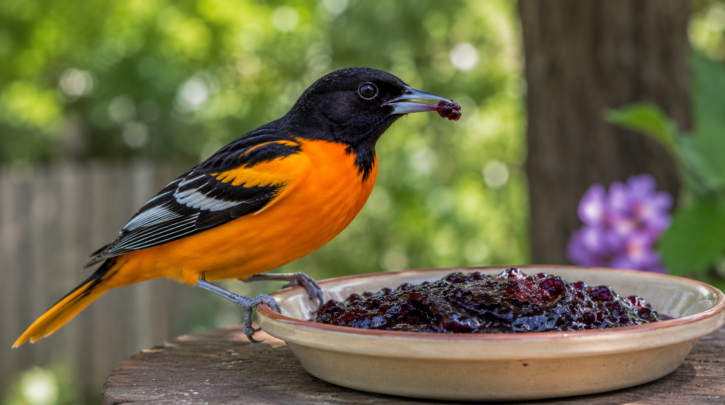

Grape jelly is probably the single most famous oriole attractant — and for good reason, it works remarkably well. But jelly done wrong can genuinely harm birds, so it’s worth understanding both why orioles love it and how to offer it responsibly.
Why Jelly Works
Orioles are drawn to jelly for the same reason they favor dark, ripe fruit in the wild — it delivers a concentrated hit of sugar with very little effort to access, which is exactly the kind of high-energy food a bird building reserves for migration or feeding hungry chicks is drawn to. Purple grape jelly in particular seems to hold a strong appeal, likely echoing the dark, ripe fruit orioles already seek out.
How Much to Offer
A small amount — roughly a tablespoon or two per feeding station, refreshed daily or every other day — is plenty for a pair or small group of orioles. Jelly is nutritionally incomplete on its own, essentially pure sugar with none of the protein or micronutrients found in fresh fruit or insects, so it should function as a supplement and an attractant rather than a primary food source.
The Case for Moderation
Because jelly is so calorie-dense and nutritionally thin, offering it in large, constantly replenished quantities can encourage orioles to fill up on jelly at the expense of the more balanced fruit and insect diet they’d otherwise be eating. Small, modest portions encourage jelly to function as a supplement rather than a dietary centerpiece.
Container Safety: Avoid Deep Wells
The single biggest safety issue with jelly feeding is container depth. A deep jar or dish can trap a bird’s feet or feathers in sticky jelly, sometimes fatally, and there are documented cases of orioles and other birds becoming stuck in improperly presented jelly. Always use a shallow dish or a feeder specifically designed with a shallow jelly cup, never a deep container like an open jar.
Avoid Sugar-Free Jelly
Sugar-free or artificially sweetened jelly should never be offered to birds. Some sugar substitutes, particularly xylitol, are documented as toxic to a range of animals, and there’s no reason to introduce that risk when standard grape jelly works just as well and poses no such danger. Stick to conventional, sugar-sweetened grape jelly rather than diet or reduced-sugar alternatives.
Jelly Quality
Any standard grape jelly works, though some hosts prefer to avoid jelly with heavy artificial dye content, opting instead for simpler formulations with fewer additives. This is more a personal preference than a documented safety concern, since standard grape jelly in reasonable quantities has a long track record as a safe oriole attractant.
Cleaning and Ant Management
Jelly attracts ants and wasps as readily as it attracts orioles, so a feeder placement with some form of ant moat or barrier, combined with regular cleaning of drips and spills, keeps the feeding station appealing to birds rather than insects. Wipe down the jelly dish and surrounding feeder surface every time you refill it.
Ready to pair jelly with the right feeder? See our jelly and fruit feeder picks for models built with proper shallow cups and easy cleaning access.
Alternatives and Complements to Jelly
Orange halves are a natural complement to jelly, offering a similar sugar-forward appeal with the added benefit of more closely resembling whole fruit. Some hosts alternate between jelly and orange halves, or offer both simultaneously, since individual bird preference varies and having more than one option increases the odds a visiting oriole finds something appealing right away.
Homemade vs. Store-Bought Jelly
Standard store-bought grape jelly is perfectly adequate and is what most successful oriole hosts use without any issue. Homemade jelly works too, provided it’s made with real sugar rather than a sugar substitute, though there’s no meaningful advantage over a simple store-bought jar for the purpose of attracting birds.
Timing Jelly Feeding to the Season
Jelly tends to see the heaviest use during the mid-to-late summer dietary shift toward fruit and again during the pre-migration fueling period in early fall, when orioles are actively building energy reserves. Early spring arrivals, still focused primarily on insects, may show less interest in jelly initially, which is normal and not a sign the feeding station has failed.
What to Watch For
A jelly station that’s consistently emptied within a day is a good sign of active use and can be refilled on that same daily schedule. A station that sits untouched for several days despite confirmed oriole activity in the area may simply mean the local birds are currently favoring fruit or nectar instead — jelly is one option among several, not a guaranteed draw on its own.